Summary of this infographic
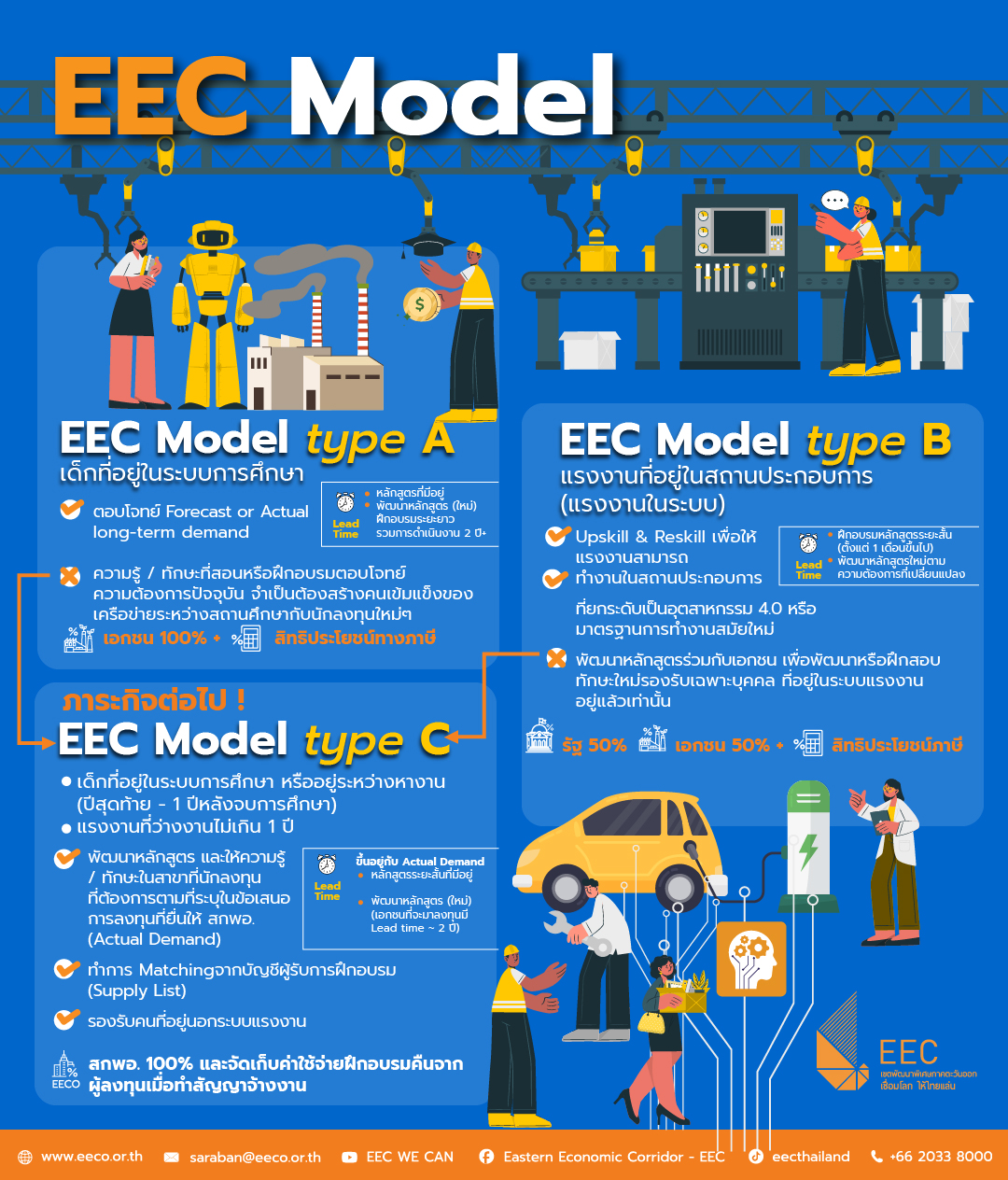
The infographic explains the EEC Model, which sets out workforce development models by target group. Type A is for students in the education system, type B is for workers in establishments, and type C, the next mission, is for students in the education system or job seekers and for workers unemployed for no more than 1 year. Each type shows its approach, who pays for training, and the course lead time.
- EEC Model type A (students in the education system): meets forecast or actual long-term demand; costs are 100% private sector plus tax benefits.
- Type A lead time: existing courses, or new course development with long-term training, 2 years or more in total.
- Type A limitation: for teaching or training to meet current needs, a strong network between educational institutions and new investors must be built.
- EEC Model type B (workers in establishments, in the formal labor system): upskilling and reskilling for work in establishments moving to Industry 4.0 or modern work standards; costs are 50% government, 50% private sector plus tax benefits.
- Type B lead time: short courses (1 month or longer) and new courses developed as needs change; limitation: courses developed with the private sector serve only people already in the labor system.
- EEC Model type C (the next mission): students in the education system or job seekers (final year to 1 year after graduation), and workers unemployed for no more than 1 year.
- Type C develops courses and skills in fields investors need, as stated in investment proposals submitted to EECO (actual demand), matches trainees from a supply list, and supports people outside the labor system.
- Type C costs: 100% EECO, with training costs recovered from investors when employment contracts are signed; lead time depends on actual demand (incoming private investors have a lead time of about 2 years).