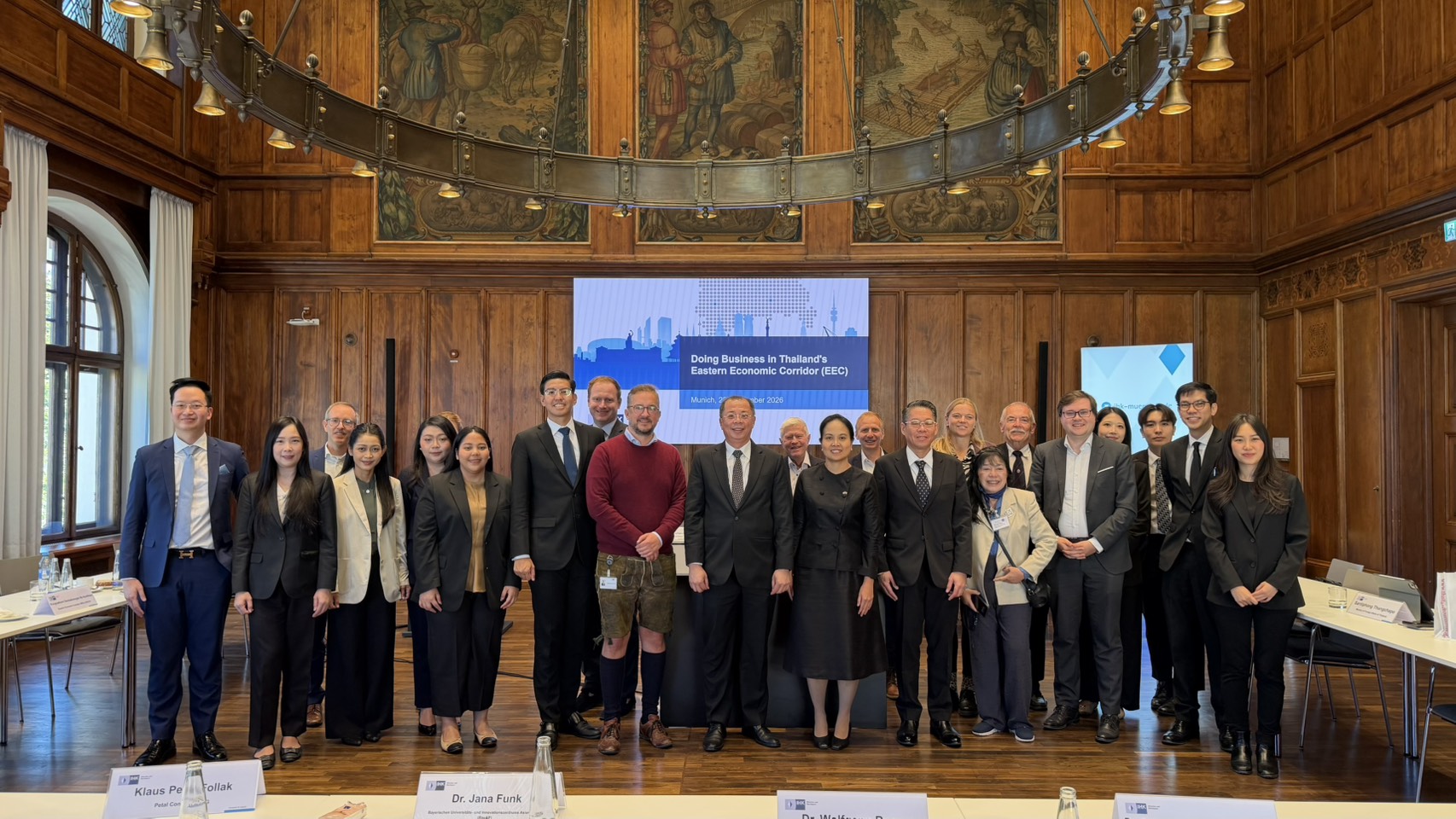
Recently, Dr. Chula Sukmanop, Secretary-General of the Eastern Economic Corridor Office (EECO), led a delegation on a visit to Germany from 21–25 September 2026, covering Berlin, Munich, and Stuttgart. The mission was aimed to proactively promote investment from German companies by showcasing the Eastern Economic Corridor’s (EEC) potential and investment opportunities, particularly in Next-Generation Automotive and Smart City development.
The delegation also sought to explore opportunities for cooperation in technology, innovation, and smart infrastructure to strengthen Thailand’s competitiveness as a manufacturing base and business hub for the ASEAN region.
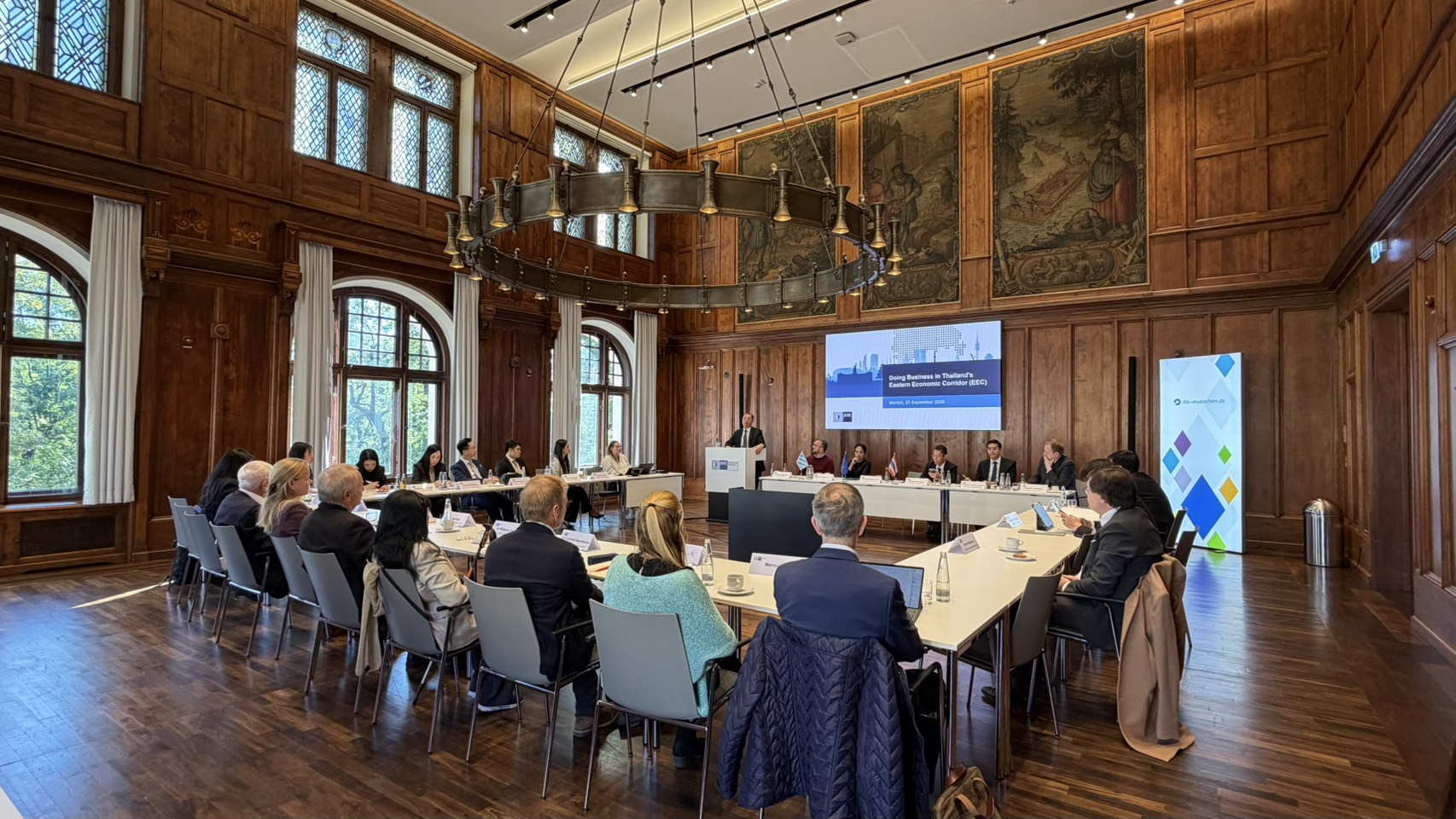
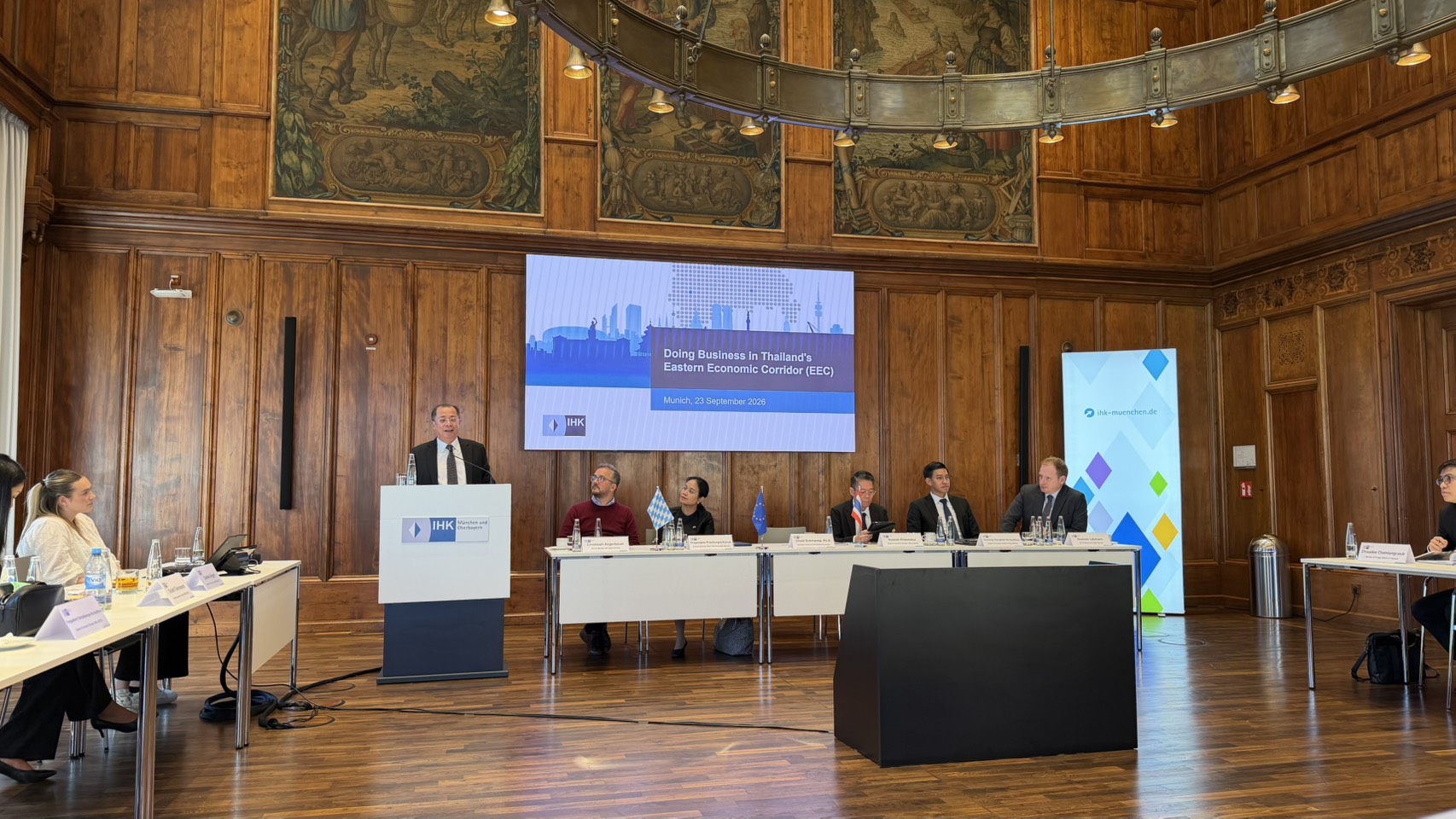
One of the key activities of the visit was a Roundtable Discussion on “Doing Business in Thailand’s Eastern Economic Corridor (EEC)”, held on 23 September 2026 in Munich. The event was jointly organized by EECO, the Royal Thai Consulate-General in Munich, and the Chamber of Commerce and Industry for Munich and Upper Bavaria (IHK München). With more than 400,000 members, IHK München is one of the largest chambers of commerce in Germany and plays an important role in connecting businesses in Bavaria with international trade and investment networks.
The roundtable brought together representatives from EECO, the Royal Thai Consulate-General in Munich, IHK München, and relevant economic organizations in Bavaria. The session began with presentations on investment opportunities in the EEC and the development of the EEC Capital City Project (EECiti), delivered by EECO executives, followed by an open discussion and exchange of views with German business representatives and relevant organizations. The discussion focused on perspectives on investing in Thailand, as well as the factors and challenges influencing German companies’ investment decisions in Asia.
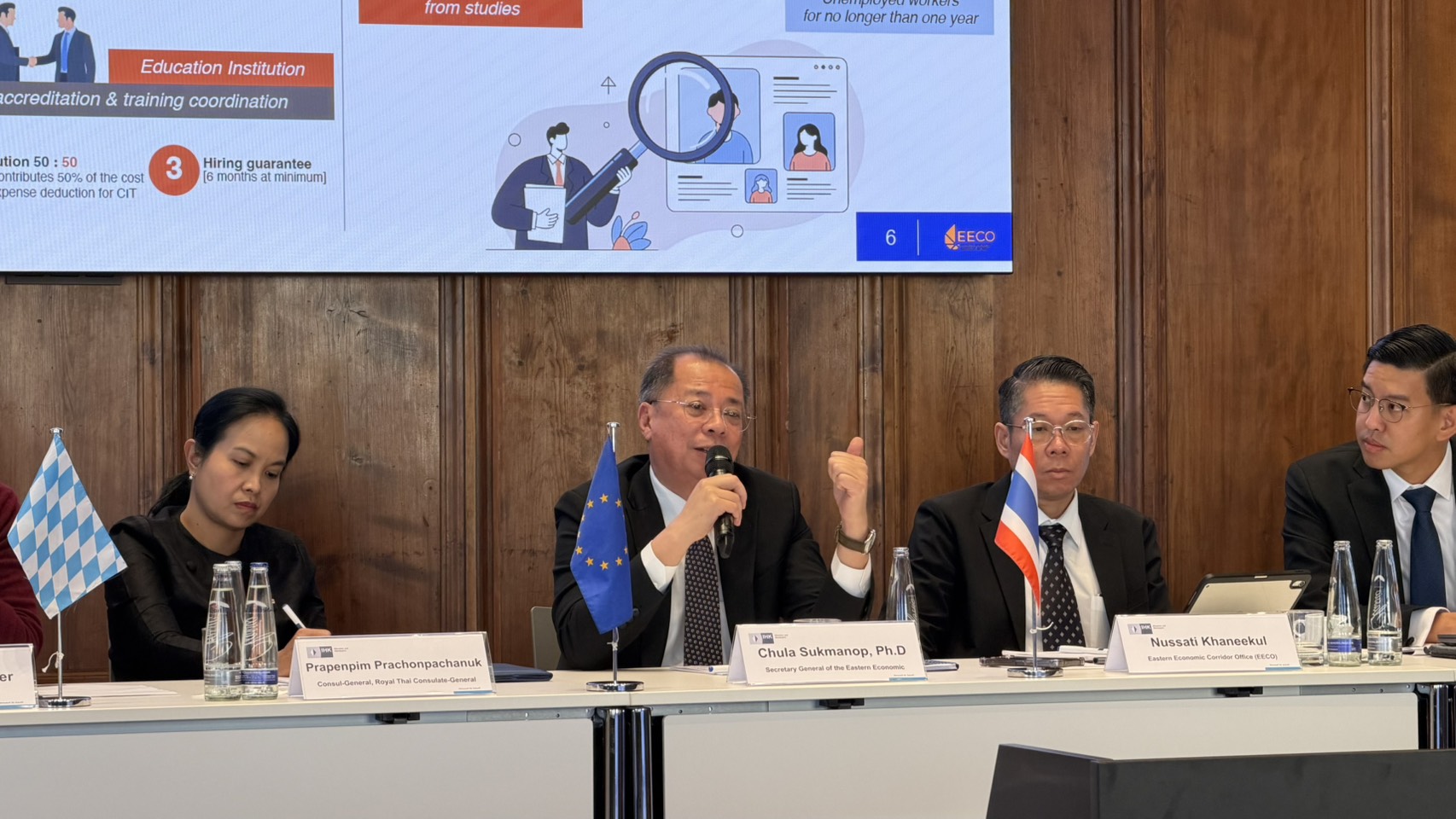
In his opening remarks, Dr. Chula Sukmanop highlighted that Germany is one of Thailand’s important economic partners in Europe and possesses strong expertise in areas that are closely aligned with the EEC’s development priorities, including advanced manufacturing, automotive technology, engineering, automation, clean energy, and urban innovation. He emphasized that the EEC is not focused solely on increasing investment volumes, but also on developing a modern and sustainable economic ecosystem that enables international companies to invest, develop technologies, and grow together with Thailand.
For the Next-Generation Automotive and EV industry, EECO sees significant opportunities to connect Germany’s automotive capabilities with Thailand’s established manufacturing base. Investment opportunities span the entire value chain, including vehicle manufacturing, batteries, electronic components, automation, charging infrastructure, and technologies related to future mobility and propulsion systems.
EECiti Project was presented as another key opportunity for cooperation with German companies. The project aims to develop a new urban model integrating Smart Mobility, Green Utilities, Digital Technology, Healthcare, and Modern Urban Infrastructure. It also provides opportunities for Thai and German technology companies, research institutions, and public-sector organizations to jointly develop and test solutions for the cities of the future.
The roundtable also included the exchange of views on workforce development and vocational education, including an overview of the vocational system and discussions on how to better align industrial demand with manpower development. This is an important factor in preparing the EEC workforce to support advanced technology industries. IHK München also plays an important role in skills development, technological transformation, innovation, sustainability, and international business activities.
Beyond the roundtable, the EECO delegation also held meetings with German government agencies, business organizations, and leading companies across various sectors, including Rheinmetall AG, Germany Trade & Invest (GTAI), the German Association of the Automotive Industry (VDA), the Senate Department for Economic Affairs, Energy and Public Enterprises and Berlin Partner, Siemens Mobility, DB Engineering & Consulting, BMW Group, Herrenknecht AG, Drees & Sommer SE, and Festo Didactic. The meetings provided opportunities to exchange views on investment, technology, infrastructure development, and potential linkages between German companies and the EEC supply chain.
The delegation also met with the City of Munich and visited Munich Urban Colab to explore approaches to smart city development, innovation ecosystems, and the application of technology in urban management. Areas that could potentially be adapted and further developed for EECiti include Smart City Planning, Digital Twin, Smart and Sustainable Mobility, intelligent public transportation systems, and data-driven urban management.
The visit to Germany reflects EECO’s commitment to proactively attracting investment by leveraging the strengths of German companies in technology, innovation, and expertise and connecting them with the EEC’s capabilities in infrastructure, industrial ecosystems, and EECiti development. The mission aims to create new investment opportunities, strengthen the value chains of targeted industries, and foster concrete cooperation among the public sector, private sector, and relevant institutions in Thailand and Germany. EECO will continue to build on the outcomes of these discussions and pursue opportunities toward real investment and future business partnerships.