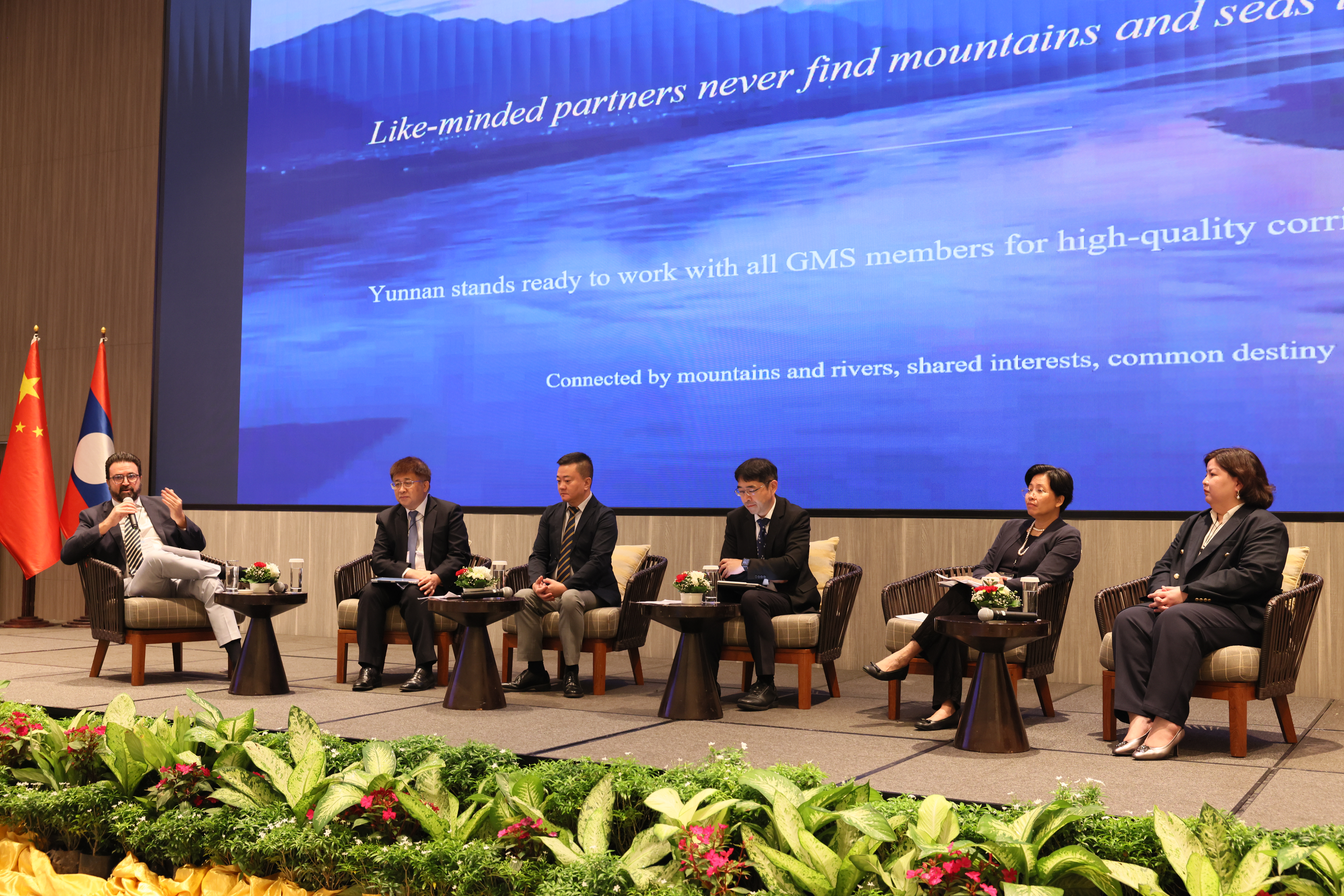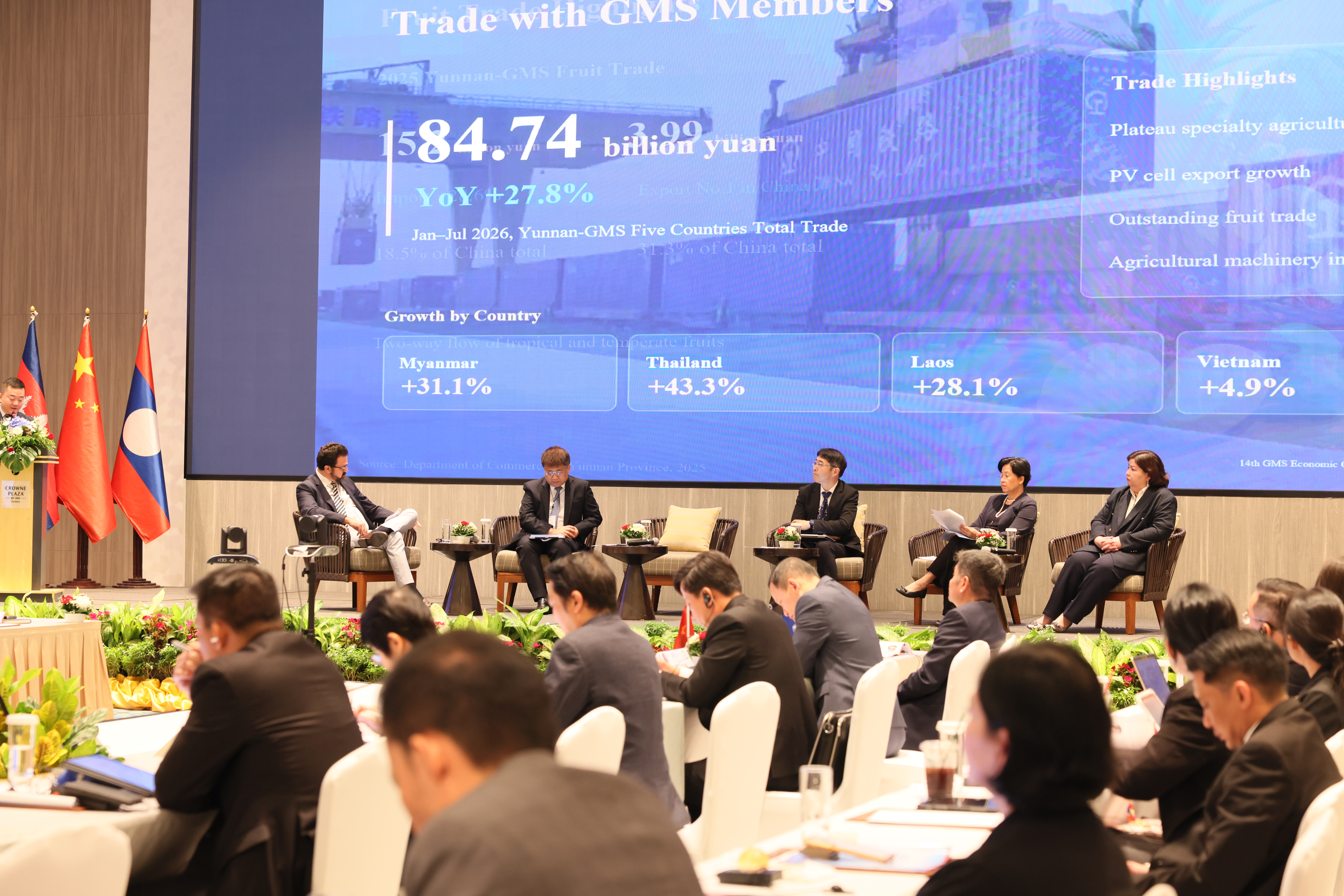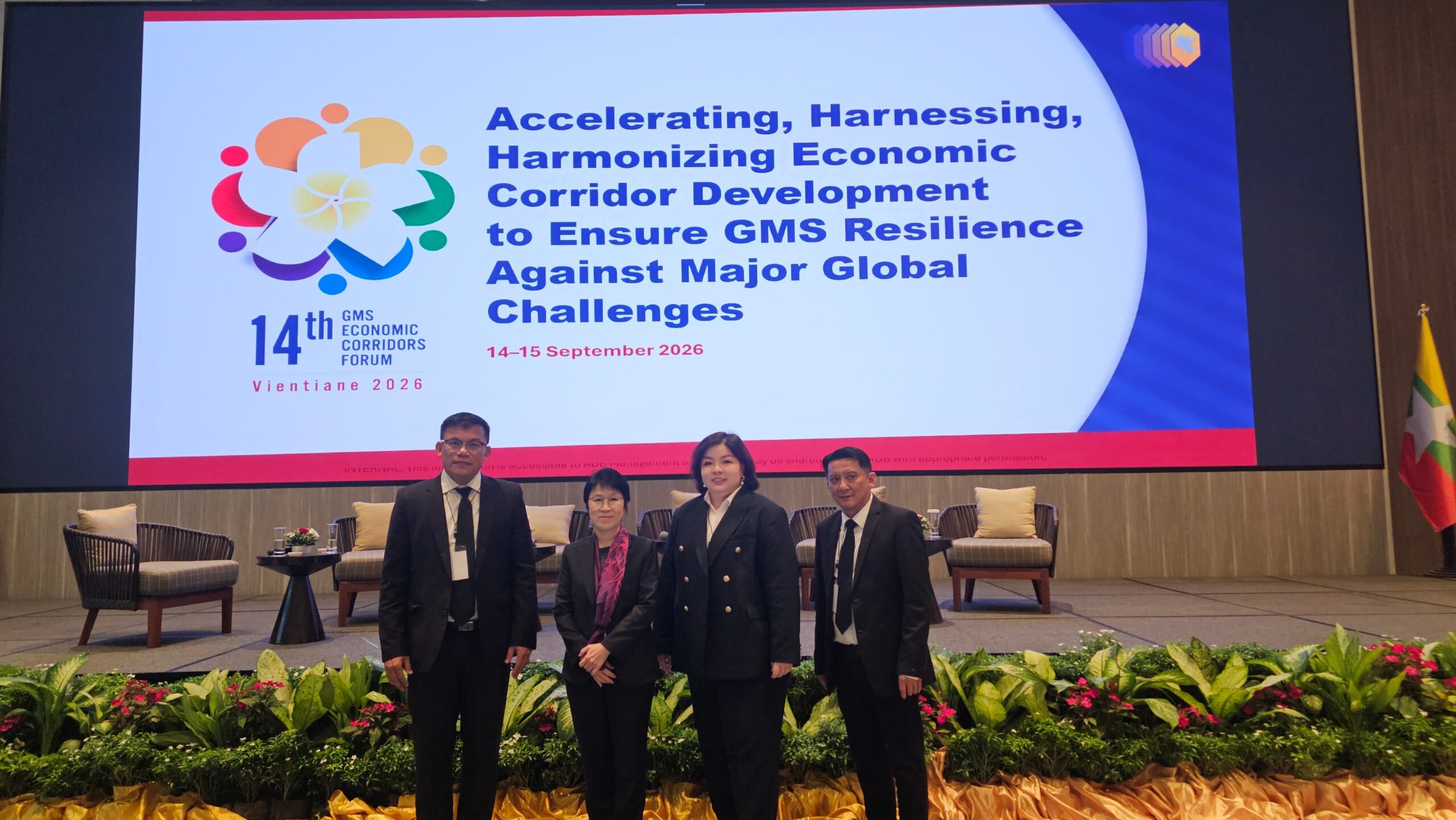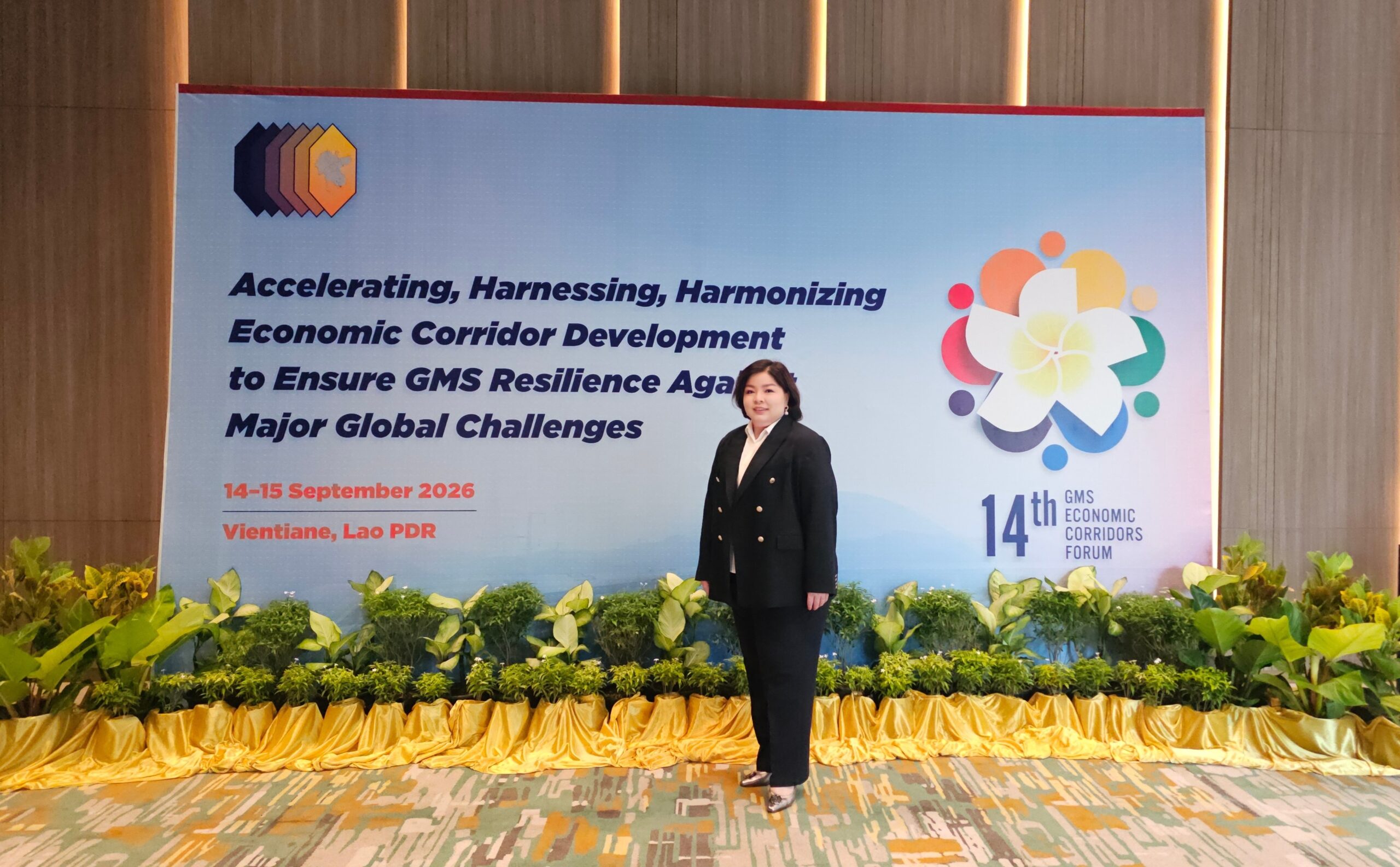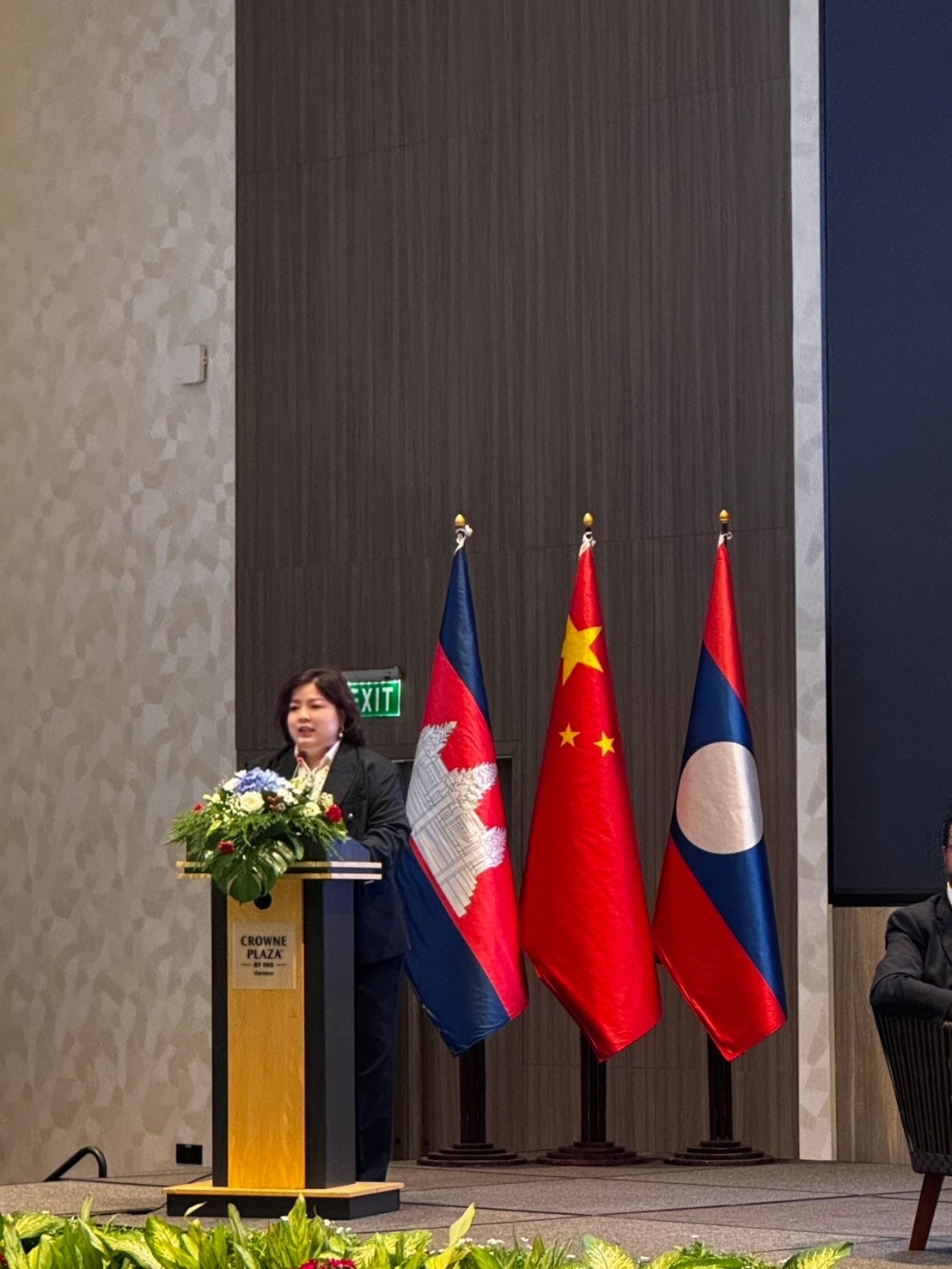
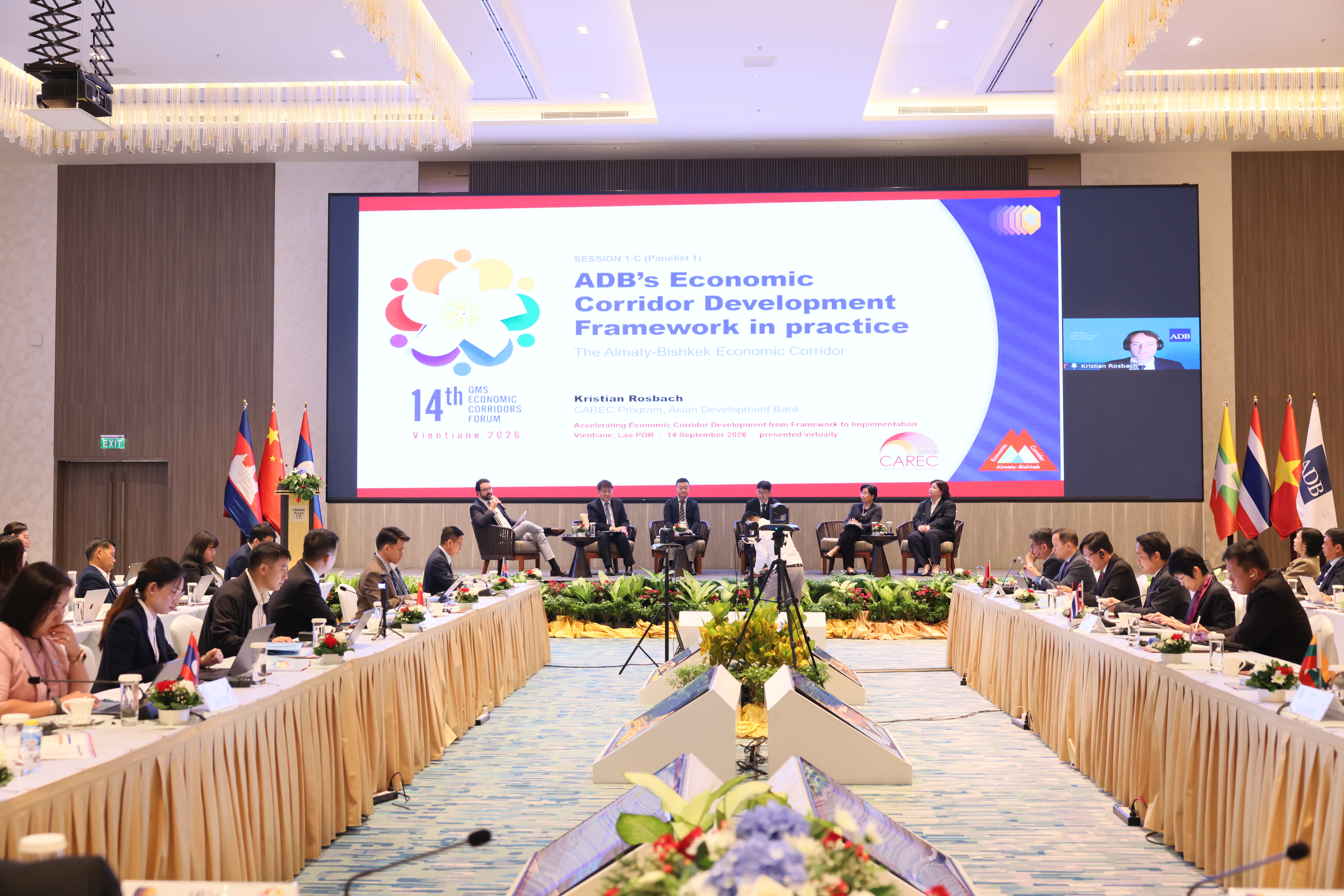
Dr. Cholachit Vorawangso Virakul, Assistant Secretary-General of the Eastern Economic Corridor Office of Thailand (EECO), recently took part in the 14th Greater Mekong Subregion (GMS) Economic Corridors Forum (ECF-14), held on 14–15 September 2026 in Vientiane, Lao PDR. The Forum was hosted and chaired by the Government of Lao PDR, with the GMS Secretariat of the Asian Development Bank (ADB) as co-chair. Held under the theme “Accelerating, Harnessing, Harmonizing Economic Corridor Development to Ensure GMS Resilience Against Major Global Challenges,” it brought together senior officials from GMS countries, local governments, development partners and the private sector to turn corridor priorities into concrete projects and investment.
On 14 September 2026, Assistant Secretary-General presented “Thailand Eastern Economic Corridor” in Session 1, “Accelerating Economic Corridor Development from Framework to Implementation.” The session examined how investment projects along economic corridors are identified, planned and financed. She was joined by a representative of public and private sectors from Thailand and GMS members. Assistant Secretary-General gave an overview of the EEC, which spans three provinces (Chachoengsao, Chonburi and Rayong). Under the approach of “Turn Vision into Actions,” she showed how land use, infrastructure and utilities, integrated government services and investment come together to support economic activity and, ultimately, urban and community development. She also presented the EEC’s key public-private partnership (PPP) infrastructure projects: rail linking three airports, U-Tapao International Airport, Laem Chabang Port, and Map Ta Phut Industrial Port. She also covered the EEC Capital City (EECiti), planned as a regional smart city.
On investment, Assistant Secretary-General highlighted the EEC’s five targeted clusters: Services, Medical and Health, Digital, Next-Generation Automotive, and Bio-Circular-Green (BCG) economy with incentives for investors. This presentation also positioned the EEC as an example of turning a corridor framework into real investment and projects on the ground.